


Case Story – Security company— Operational Flow Design
Context
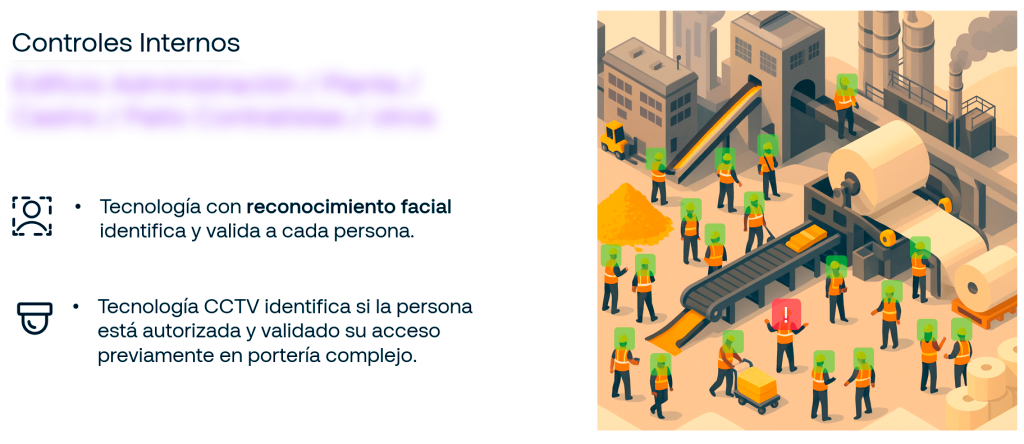
A global security company needed to communicate complex operational processes involving multiple technologies, roles, and decision points.
These processes were critical for both operations and client communication, but were difficult to explain clearly across teams and stakeholders.
Challenge
The main challenge was not only complexity, but a lack of understanding.
Existing explanations relied on long technical descriptions, making it difficult for stakeholders to understand:
- how the system works
- how decisions are made
- how different components interact
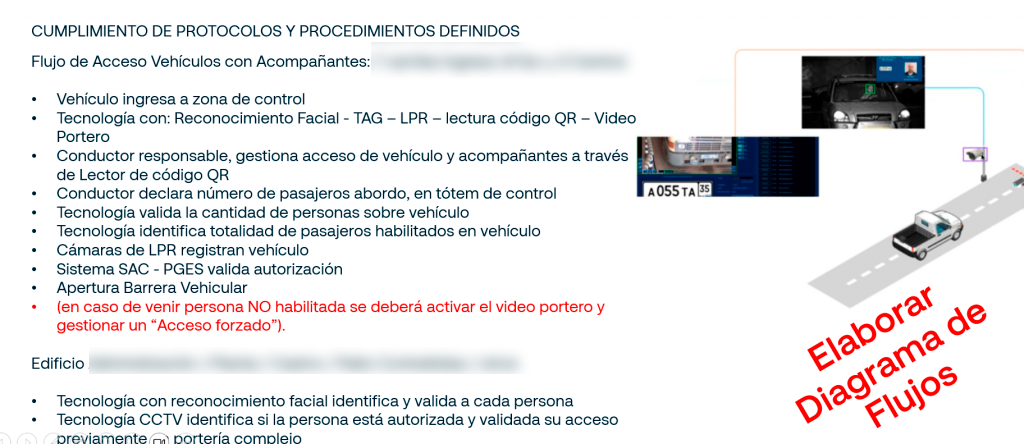
The client needed a way to communicate these processes in a clear, structured, and intuitive way.
Design Thinking approach
The process began by understanding the system from multiple perspectives.
To achieve this, I:
- interviewed the Head of Operations
- interviewed the Head of Sales
- mapped the complete process from both operational and commercial viewpoints
This revealed key:
- decision points
- system interactions
- areas of confusion
Instead of documenting the process, the goal shifted to making it understandable.
Communication principle
This approach is based on a core science Communication Principle:
- people understand systems better when they can see how elements connect and evolve over time.
- complex processes are difficult to grasp when presented as isolated information.
- understanding emerges when relationships, sequences, and dependencies become visible.
Insight
People don’t understand processes through text — they understand them through structured flows.
Storytelling strategy
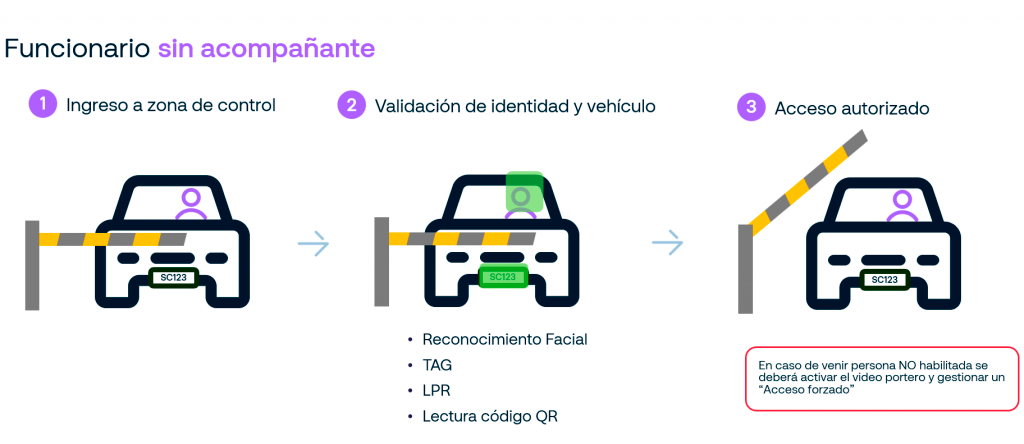
The process was restructured as a narrative sequence, where each step logically leads to the next.
The visual system was designed to:
- reveal the flow of actions
- make decision points explicit
- connect roles, technologies, and outcomes
This transforms the process into something users can follow – not just read.
Solution
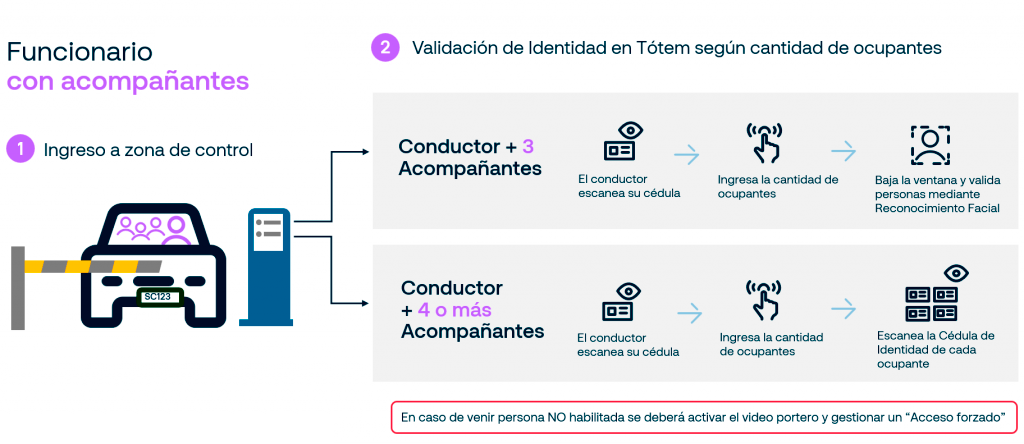
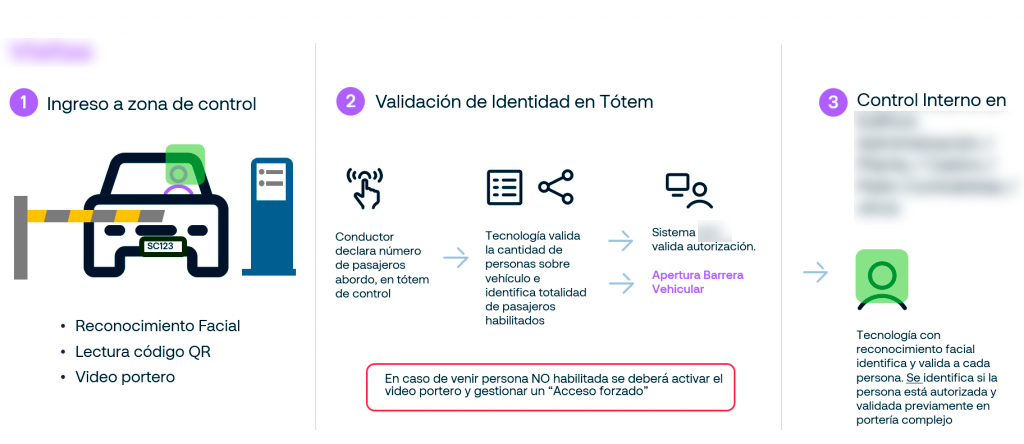
Complex textual descriptions were transformed into clear visual flow systems.
The solution included:
- structured diagrams representing each process
- clear definition of steps, roles, and decision points
- visual representation of technologies (facial recognition, QR validation, access control)
- contextual elements to anchor the process in real operational scenarios
Outcome
The new visual system improved:
- clarity in client communication
- alignment between operational and commercial teams
- the ability to explain complex systems in a structured and intuitive way
It transformed a complex operational process into a shared understanding tool that supports communication, alignment, and decision-making.